

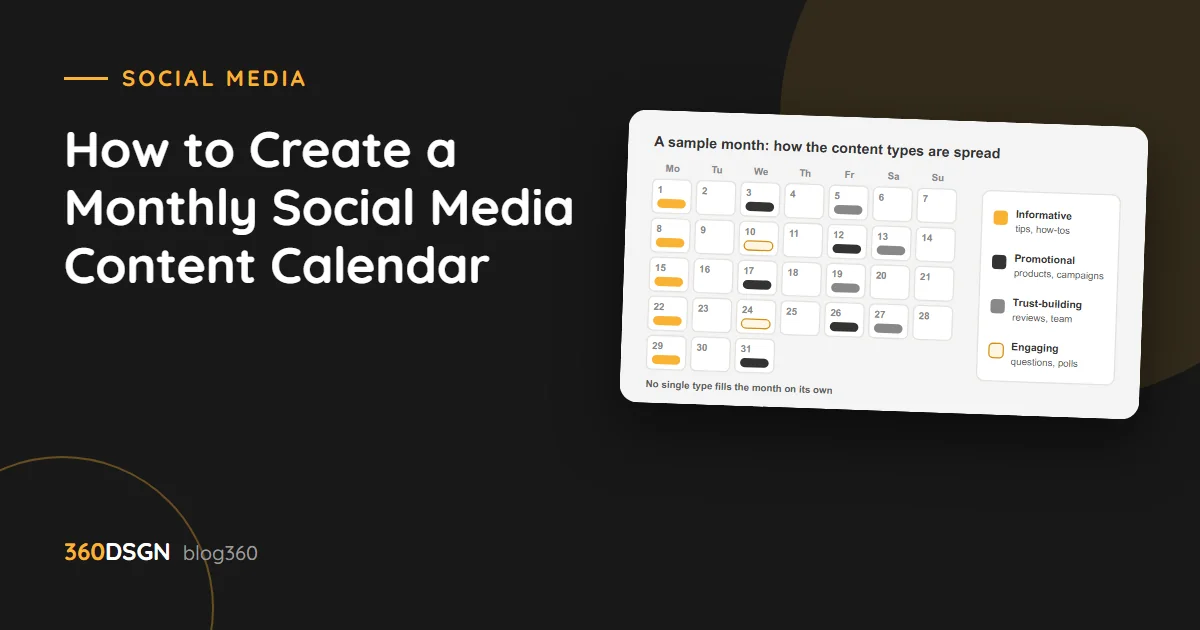
How do you create a monthly social media content calendar? The short answer: Set the goal for the month first, then spread your content types evenly, and place the days and times last. A calendar puts an end to the “what should we post today” scramble and brings order to production, approval and publishing. In this post we explain, step by step, how we build a calendar for one month.
Why do you need a calendar?
Two things happen on unplanned accounts: either nothing is posted for days, or a careless visual goes out at the last minute. A calendar lets you see the whole month up front. Special days, campaigns and anything that needs a shoot are known in advance, and everyone knows what they have to deliver and when.
Order does more than make the work easier; your followers also learn what to expect from the account. On frequency, the rule is simple: choose a pace you can sustain. A few carefully made posts a week are better than a careless post every day.
Step 1: Set the goal for the month
Choose a single main goal for each month. It might be introducing a new product, bringing visitors to the store, collecting applications or simply keeping the brand top of mind. The goal determines which content carries the most weight that month. “More followers” is not a goal in itself; followers are the result of the right content.
Then write down the month’s fixed dates: public holidays and special days, your industry’s trade shows, your own campaign and event dates. This is the skeleton of the calendar.
Step 2: Spread out your content types
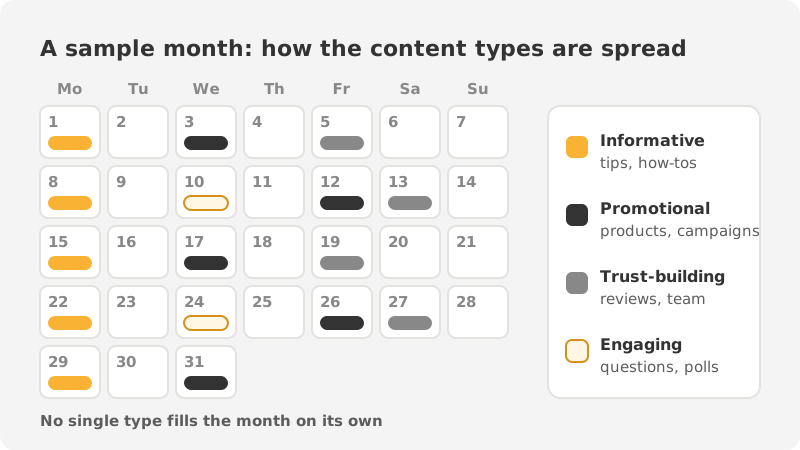
An account that posts nothing but products eventually turns into a billboard. It helps to divide content into four main types and spread them evenly across the month:
- Informative: tips, how-tos, answers to frequently asked questions.
- Promotional: products, services, campaigns, new arrivals.
- Trust-building: customer reviews, completed work, behind the scenes, the team.
- Engaging: questions, polls, special-day posts.
There is no single correct ratio; it varies with the industry and the goal. In a campaign month promotion goes up, while in a quiet month informative and trust-building content comes to the fore. The rule that does not change is that no single type should fill the month on its own.
Choose the format up front too: single image, carousel, short video, story. Grouping content that needs a shoot onto the same day makes production easier. A single photo shoot day can yield a month’s worth of visual material. For short videos, add the video shoot to the same plan.
Step 3: Set up the production, approval and publishing flow
A calendar is not made up of publishing dates alone. Working backward, every piece of content has three more dates: the day the draft will be ready, the day it goes for approval and the day approval is due.
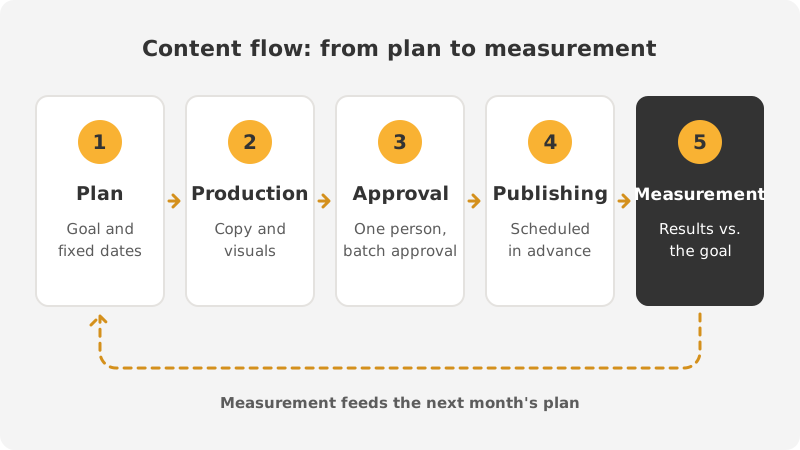
Production
Copy and visuals are prepared together. Brand colors, typeface and tone of voice should stay the same in every post; a simple set of templates is enough for that.
Approval
There should be one clearly named person who gives approval. Sending content in weekly or monthly batches, not one piece at a time, saves time for both the person preparing it and the person approving it. Set a deadline for revision requests.
Publishing
Approved content is scheduled ahead with a scheduling tool, so publishing does not depend on who happens to be available that day. Replying to the comments and messages that come in after publishing is part of the plan too; decide who will reply and how quickly.
Remember to leave gaps in the calendar. When something unexpected hits the news, you need to be able to move planned content and hold back a post that would come across as inappropriate.
Step 4: Measure and carry it into next month
When the month is over, look at how each content type performed. Choose the right metric for the month’s goal:
- Awareness goal: reach and new followers.
- Interest goal: saves, shares, comments.
- Sales or application goal: profile visits, link clicks, messages, forms.
The number of likes is misleading on its own. A post that gets few likes but brings in many messages may be worth more to your business. Note the three best and three weakest pieces of content, and build next month’s calendar on those notes.
In summary
A good content calendar answers four questions: what are we aiming for this month, how much of each content type will we post, who will prepare and approve what and when, and how will we measure the result. When these four steps are repeated every month, the account becomes orderly, consistent and measurable.
At 360DSGN we plan the content calendar, design, shooting and publishing together. For details, take a look at our social media management page or contact us.