

Businesses that decide to advertise usually start with the same question: should we advertise on Google or on Instagram? The short answer is this: Google Ads reaches the person who is already searching for your product; Meta ads reach the person who is not searching yet but might be interested. The right channel depends on how your customers find you. In this post we explain the difference between the two channels, which one suits which business and how to split your budget.
The core difference: capturing demand or creating it?
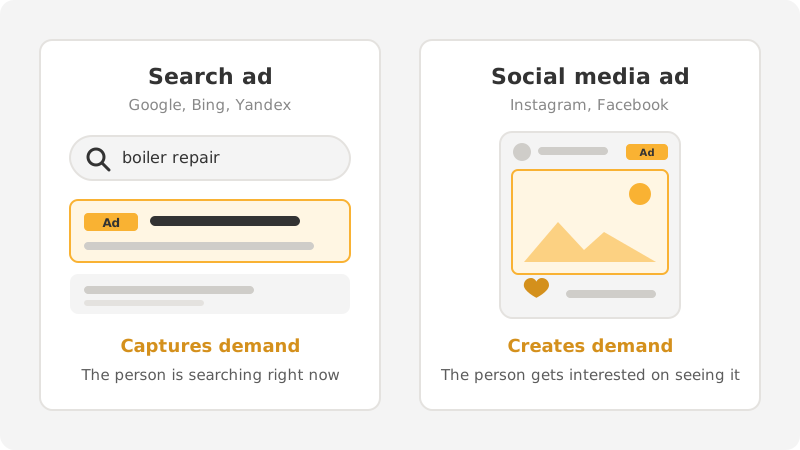
Someone searching on Google has intent. A person who types “boiler repair Sakarya” is looking for a repair service right now. A search ad appears in front of that person at exactly that moment. We call this capturing demand.
Someone scrolling through Instagram or Facebook, on the other hand, is not looking for anything. Your ad shows up in their feed based on their interests and behavior. They discover the product then and there, maybe save it, maybe come back days later. We call this creating demand.
Which businesses is Google Ads right for?
Google Ads is a strong starting point for any business people search for when the need arises:
- Urgent and local services: servicing, repairs, moving, healthcare, legal.
- Products people know by name: e-commerce sites selling products searched for by model or category name.
- Business-to-business sales: considered purchases such as machinery, building materials and software.
The thing to watch is that cost per click varies widely by industry. On highly competitive keywords the budget runs out fast. That is why keyword selection, the negative keyword list and the quality of the landing page directly affect the result.
Which businesses are Meta ads right for?
Instagram and Facebook ads shine for products that can be explained visually and that people “want as soon as they see”:
- Visual products: clothing, jewelry, home decor, food, cosmetics.
- Businesses that sell an experience: hotels, restaurants, events, beauty salons.
- New brands: products nobody searches for by name yet and that need to become known first.
Here the quality of the image and video does the heavy lifting. Of two ads shown to the same audience, the better-shot one usually performs noticeably better. For that reason, product photography and short video production should be treated as part of the ad budget.
How should you split the budget between the two channels?
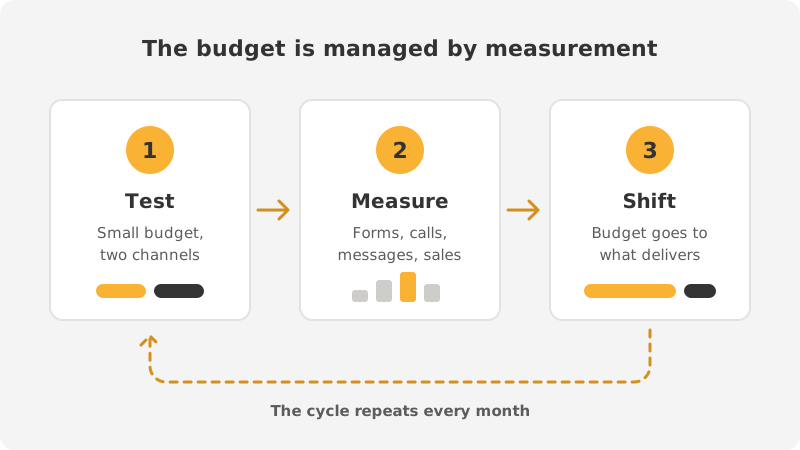
There is no single right ratio, but the path is clear. Start with the channel that sits closer to your business, set up tracking and, once the first data comes in, shift budget toward the side that delivers results.
1. Test with a small budget
In the first weeks the goal is not to break sales records but to collect data. Which keyword, which creative, which audience is getting attention? Committing a large budget before you can see that is spending in the dark.
2. Measure conversions
The number of clicks alone tells you nothing. Form submissions, phone calls, WhatsApp messages and sales should each be tracked separately. If tracking is not set up correctly, you cannot know which channel is working.
3. Shift the budget
Scale the campaign that delivers results and switch off the one that does not. In most businesses the two channels work together: Meta ads introduce the brand, and Google Ads steps in at the moment of decision. Ads shown again to people who visited your site and left tie the two together.
Three common mistakes
- Sending the ad to the homepage. The visitor cannot find what they were looking for. The ad should open on the page of the product or service it promises.
- Starting without tracking in place. You can see the spend but not the result.
- Setting up the campaign and walking away. An ad account needs regular maintenance: keywords, creatives and bids are updated based on the data.
In short
If your customers find you by searching, start with Google Ads; if they discover you by seeing you, start with Meta ads. Whichever you start with, set up tracking from day one and leave the decision to your own account’s data, not to guesswork.
At 360DSGN, we manage Google, Meta, Bing and Yandex ads under one roof and build conversion tracking into the site’s code. For details, take a look at our digital advertising page or contact us.