

Aerial filming shows what cannot be shown from the ground: the size of a facility, the location of a plot of land, the crowd at an event. The short answer is this: a good aerial shoot is decided in the planning beforehand, not during the flight; the purpose, time of day, weather and shot list are settled in advance. In this post we explain which businesses aerial filming suits, the steps of planning and what you end up with after the shoot.
Which businesses benefit from aerial filming?
Aerial footage works for any business where scale, location or surroundings are part of the sales case:
- Hotels and resorts: how close the property is to the sea, a lake or a forest is visible in a single frame.
- Construction and building projects: progress is recorded from the same point at set intervals and shown to investors and buyers.
- Factories and production facilities: the indoor area, the yard and the shipping layout are seen together. It makes a strong opening scene for a corporate video.
- Events: openings, festivals, sports events. The scale of attendance does not come across in a shot taken from the ground.
- Real estate and land: the location of the plot, its distance from the road and the town center, the development around it.
Aerial footage is rarely used on its own; together with scenes shot on the ground, it becomes part of a promotional video. When you want to walk viewers through an interior, a 360-degree virtual tour is the better tool.
How is an aerial shoot planned?
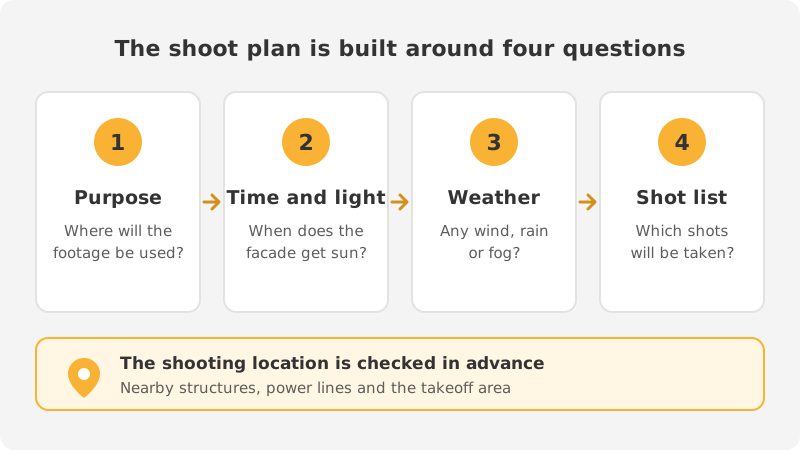
We build the plan around four questions. They are answered in order, because each answer narrows down the next.
1. Purpose
The first question is: where will this footage be used? An opening video for a website, a short vertical video for social media and photographs for a catalog each call for a different shoot. Once the purpose is clear, the duration, framing and type of movement follow.
If the purpose on a construction project is to document progress, you need repeatable frames from the same point at the same angle. If the purpose at a hotel is promotion, slow, smooth movements that show the property together with its surroundings come to the fore.
2. Time and light
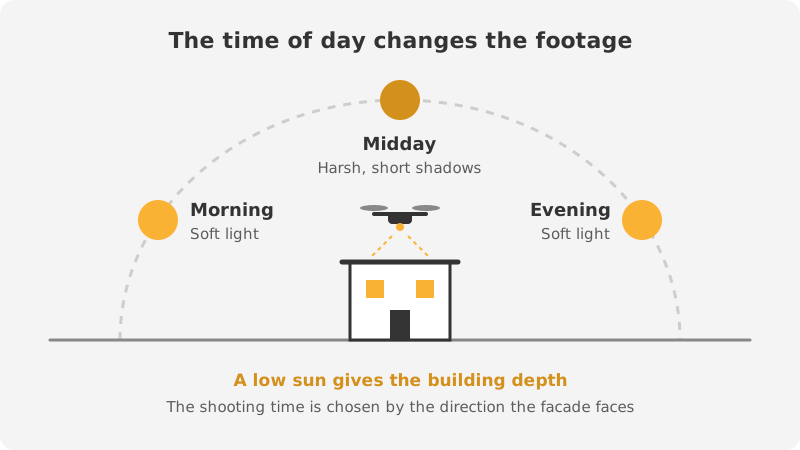
The same building looks like three different buildings in the morning, at noon and in the evening. When the sun is low, the light is soft, shadows lengthen and structures gain depth. Around midday the light comes from directly above; shadows are short and harsh, and surfaces look flat. We choose the shooting time according to the direction the building’s main facade faces.
3. Weather conditions
Wind, rain and fog directly affect a shoot. The shoot is planned around the weather, which is why we put a backup day in the schedule. If the weather is not suitable, the shoot is postponed. An overcast but calm day, however, is not as bad as people think: the light is evenly spread and there are no harsh shadows.
4. Shot list
Improvising on site wastes time. Before the shoot we write down which shots will be taken:
- Establishing shot: the whole facility and its surroundings.
- Approach: a slow move from a distance toward the building.
- Top-down view: a straight-down angle showing the layout.
- Orbit: a circle around the building showing all of its facades.
- Details: standout features such as the entrance, the roof, the pool or the yard.
Checking the shooting location
The shooting location is checked in advance. We look at whether the area is suitable for filming, the surrounding buildings, power lines and trees, and whether there is a safe area for takeoff. If the location is not suitable, we tell you at the planning stage, not on the day of the shoot.
What should the business prepare?
From the air, everything shows: a cluttered storage yard, unfinished landscaping, the cars in the parking lot. Tidying the site and checking the signage and lighting before the shoot makes a noticeable difference to the result. You also need to tell us in advance about any areas you do not want in the footage; we set the framing accordingly.
What is delivered at the end of the shoot?
The deliverables are discussed at the start of the job, because the shot list is prepared around them. On most jobs they are:
- A short edited video, with a vertical version for social media if needed.
- Color-graded aerial photographs.
- A version of the video sized to load quickly on your website.
Knowing from the outset where you will use the footage helps here too. Separate versions for your site, social media and presentations can all come from a single shoot, as long as the framing was set up for it.
In short
The quality of an aerial shoot is determined by the decisions made before going on site: where the footage will be used, what time it will be shot, whether the weather is suitable, which shots will be taken. Once these four questions are answered, the shooting day is short and efficient.
At 360DSGN, we handle aerial filming from planning through to editing. For details, take a look at our aerial filming page or contact us.