

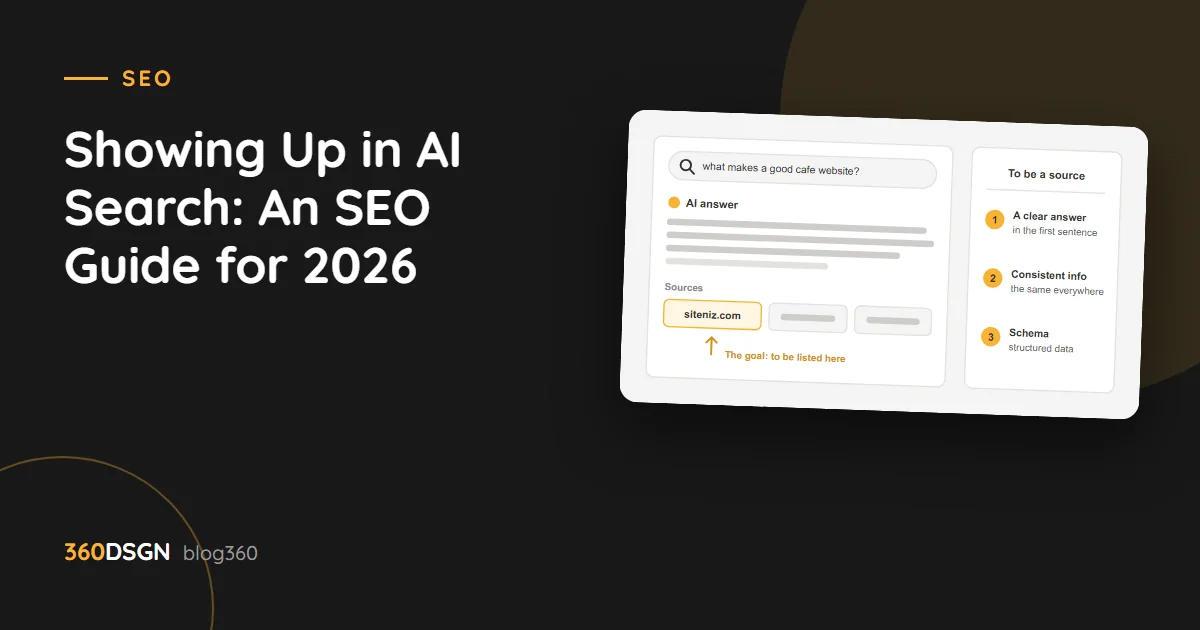
Google’s AI Overviews, ChatGPT and Perplexity respond to a question with a ready-made answer rather than a list of links. So how does your site get into those answers? The short answer: AI cites sites that answer the question clearly, keep their information consistent and are considered trustworthy, and the way there runs through a solid traditional SEO foundation. There is no separate magic method. In this post we explain what has changed, what has stayed the same and what you can do on your site.
What has changed?
In traditional search, the user types a few words, sees a list of links and clicks one. In AI search, they ask a long, conversational question: “What should I look out for when having a website built for a small café?” The system reads several sources, writes a single answer and cites the sites it drew on.
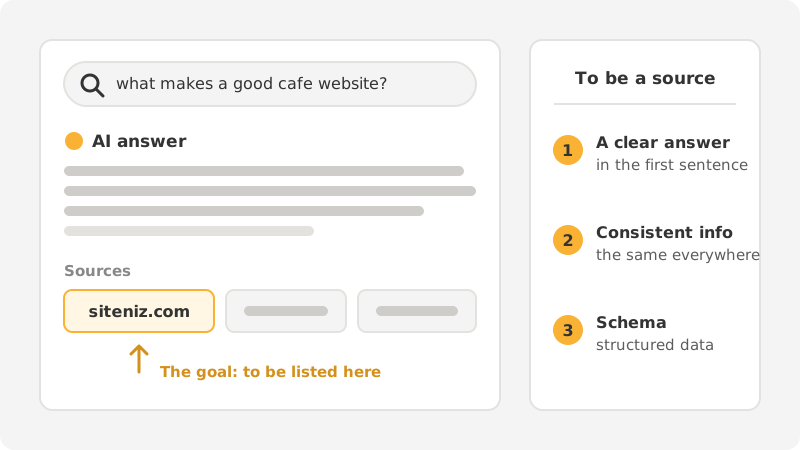
This has two consequences. First, for some questions the user gets the answer and never clicks through to any site. Second, the handful of sources listed beneath the answer stand out. The goal is no longer just to appear in the rankings; it is to be a source.
How do you write content that gets cited?
Ask the question in the heading, answer it in the first sentence
AI systems pull short, self-contained passages from a page. So write the heading as the question your customer would ask and give the answer in the very first sentence beneath it. The detail can come afterward. Content that drags out the introduction and buries the answer at the bottom of the page wears out people and machines alike.
Give specific, original information
There is no reason to cite a page that repeats the generic sentences found on every site. Write from your own experience: how do you do the work, what steps does the process involve, what do customers ask most? Lists, step-by-step explanations and comparison tables make the information easier to extract.
Show the author and the date
It should be clear who wrote the content, who the company is and when the post was last updated. An About Us page, contact details and real references are trust signals.
What does schema markup do?
Schema, or structured data, labels the information on a page in a way a machine cannot misread: this is a business, this is its address, these are its opening hours, this is a question and its answer. Visitors do not see it; search engines and AI systems read it. For most sites, these are the priorities:
- Business information: name, address, phone, opening hours, service area.
- Article and author information: headline, publication date and last-updated date.
- Frequently asked questions: questions and answers that actually appear on the page.
- Product and service information: name, description and, where applicable, stock status.
Schema does not earn rankings on its own. Nor is it right to put information in the schema that is not on the page. Its job is to make accurate information that already exists unambiguous.
For local businesses: keep your information the same everywhere
For local questions that begin with “near me” or “in Sakarya”, business information is gathered from more than one place: your website, your Google Business Profile, map listings, directory sites. If the name, address and phone number do not match across these sources, there is no telling which one is correct. Keep your Business Profile up to date, describe your services clearly and reply to reviews.
Traditional SEO is still the foundation
AI systems rely on web search for up-to-date information. If your page cannot be crawled, loads slowly or does not show up in any search, it is unlikely to be chosen as a source either. In other words, the new era does not replace the old one; it is added on top of it.
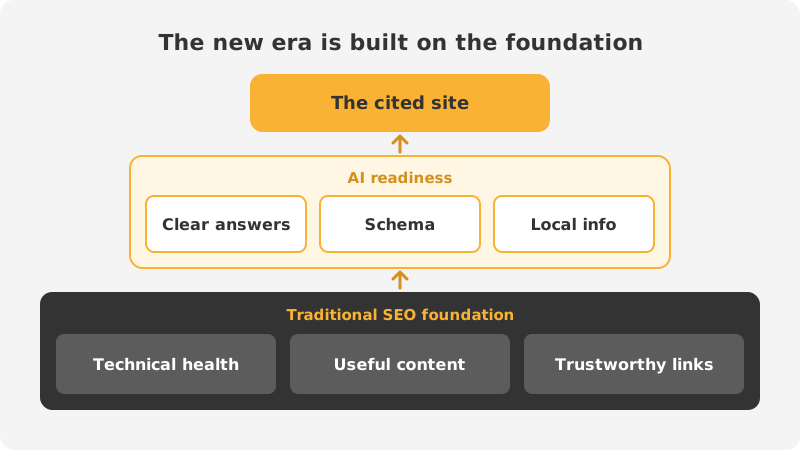
Three things sit at the base: technical health (speed, mobile-friendliness, crawlability), content that answers a need and trustworthy links from other sites. The site’s infrastructure is the groundwork for all of this. A site that is built properly at the web design stage makes every piece of work that follows easier.
How do you measure it?
Measurement in this area is still limited; be wary of tools that promise exact figures. Even so, there are things you can do. Put the questions your customers would ask to the AI tools yourself and see whether your site is cited. Track visits from these tools separately in your analytics. Keep an eye on question-style queries in your search reports.
In short
There is no special trick to showing up in AI search. A site that answers the question clearly, keeps its information consistent, is technically sound and is trustworthy stands out in traditional search and in AI answers alike. No one can promise the outcome in advance; what you can do is lay the right groundwork.
At 360DSGN we treat content structure, schema markup and technical infrastructure as one job. For details, take a look at our SEO page or contact us.